
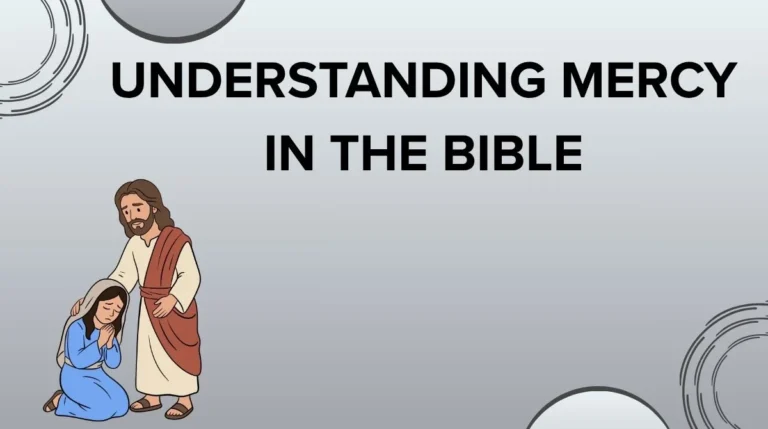
Many believers often ask: What does mercy really mean in the Bible? Is it simply forgiveness, kindness, or something deeper? When we read Scripture, we discover that mercy is one of the most beautiful expressions of God’s heart toward humanity.
Life brings moments when we feel unworthy, broken, or burdened by mistakes. In those seasons, understanding biblical mercy becomes essential.
Mercy reminds us that God does not treat us according to our failures but according to His love.
The Bible repeatedly reveals that mercy is not weakness—it is divine compassion in action. Through mercy, God restores sinners, heals wounded hearts, and gives new beginnings.
Seeking biblical understanding of mercy brings spiritual peace.
It teaches Christians how God relates to us and how we should treat others.
When we grasp God’s mercy, our faith deepens, relationships heal, and hope rises again.
Biblical Background
Mercy is central to the story of Scripture from Genesis to Revelation.
In the Old Testament, the Hebrew word often translated as mercy is “hesed,” meaning lovingkindness, faithful love, and covenant loyalty. God showed mercy to Israel again and again—even when they turned away from Him.
Exodus 34:6–7
“The Lord, the Lord God, merciful and gracious, longsuffering, and abundant in goodness and truth.”
Here, God describes His own character. Mercy is not something God occasionally shows—it is who He is.
Throughout Israel’s history:
- God spared Noah during judgment.
- He forgave David after repentance.
- He restored Israel after exile.
In the New Testament, mercy reaches its fullest expression through Jesus Christ.
Luke 6:36
“Be merciful, just as your Father also is merciful.”
Jesus did not only teach mercy—He lived it. He touched lepers, forgave sinners, welcomed outcasts, and even prayed for those who crucified Him.
Mercy, therefore, is both God’s gift to humanity and God’s command to believers.
Spiritual Interpretations of Mercy in the Bible
Below are key spiritual lessons Scripture teaches about mercy.
1. Mercy Means God Withholds the Punishment We Deserve
Lamentations 3:22–23
“Through the Lord’s mercies we are not consumed, because His compassions fail not. They are new every morning.”
Every person falls short of God’s holiness. Yet instead of immediate judgment, God offers patience and grace. Mercy gives us another chance to return to Him.
For modern Christians, this means failure is never the end. Each new day is evidence that God still invites us into restoration.
2. Mercy Flows from God’s Deep Love
Ephesians 2:4–5
“But God, who is rich in mercy, because of His great love with which He loved us…”
Mercy is motivated by love, not obligation. God does not forgive reluctantly; He delights in saving and restoring His children.
Believers today can rest in the assurance that God’s mercy is not earned by perfection. It flows freely from His loving heart.
3. Receiving Mercy Calls Us to Show Mercy
Matthew 5:7
“Blessed are the merciful, for they shall obtain mercy.”
Jesus teaches that mercy transforms how we treat others. When we truly understand God’s forgiveness, we become more patient, compassionate, and forgiving.
Modern Christians reflect Christ when they choose kindness over revenge, forgiveness over bitterness, and compassion over judgment.
4. Mercy Brings Spiritual Healing and Restoration
Psalm 51:1–2
“Have mercy upon me, O God… blot out my transgressions.”
King David prayed this after deep personal failure. Mercy restored his relationship with God.
Today, mercy still heals guilt, shame, and spiritual wounds. No sin is beyond God’s willingness to forgive when repentance is sincere.
5. Mercy Triumphs Over Judgment
James 2:13
“Mercy triumphs over judgment.”
God desires redemption more than punishment. Mercy opens the door for transformation instead of condemnation.
For believers, this means hope always exists—even in the darkest spiritual season.
Examples and Variations of Mercy in Scripture
Mercy appears in many forms throughout the Bible. Understanding these variations helps believers recognize God’s work in everyday life.
Personal Mercy — God Forgiving Individuals
Examples include:
- David after repentance (Psalm 51)
- Peter after denying Jesus (John 21)
- The thief on the cross (Luke 23:42–43)
These stories remind Christians that failure does not cancel God’s purpose.
Compassionate Mercy — Caring for the Needy
Luke 10:33–34 — The Good Samaritan
Mercy involves action. The Samaritan did not only feel compassion—he helped the wounded man.
Today, showing mercy may include:
- Helping the poor
- Encouraging the discouraged
- Supporting someone in pain
Mercy becomes visible through loving actions.
Covenant Mercy — God’s Faithfulness Over Time
God repeatedly forgave Israel despite repeated disobedience.
Micah 7:18
“Who is a God like You, pardoning iniquity… He delights in mercy.”
This teaches believers that God’s commitment does not end when we struggle. His mercy remains steady even when our faith feels weak.
Daily Mercy — God Sustaining Us
Sometimes mercy appears quietly:
- Protection from unseen danger
- Strength during hardship
- Peace in anxious moments
Many blessings we overlook are actually daily expressions of God’s mercy.
Dealing with Negative Signs or Troubling Spiritual Experiences
Sometimes believers associate mercy with moments of distress—such as guilt, troubling dreams, spiritual heaviness, or conviction of sin.
These experiences are not always negative. Often, they are invitations to return to God’s mercy.
1. Seek God’s Protection Through Prayer
When feeling spiritually troubled, pray Scripture.
Psalm 91 — Prayer for protection
Ask God to cover your mind, body, and home with His presence.
Ephesians 6:10–18 — The Armor of God
Pray daily for:
- The helmet of salvation
- The shield of faith
- The sword of the Spirit
These prayers guard against fear, spiritual attacks, and anxiety.
2. Examine Your Heart Before God
Sometimes unrest comes from areas needing surrender.
Ask yourself:
- Is there unforgiveness in my heart?
- Have I drifted away from prayer?
- Do I need repentance?
1 John 1:9
“If we confess our sins, He is faithful and just to forgive us.”
God’s mercy welcomes honest confession.
3. Reject Fear and Receive Peace
Not every troubling feeling is a warning. Many believers struggle because they forget God’s merciful nature.
Romans 8:1
“There is therefore now no condemnation to those who are in Christ Jesus.”
God corrects with love, not fear.
4. Seek Spiritual Discernment
If dreams, fears, or spiritual confusion persist:
- Speak with a trusted pastor.
- Seek mature Christian counsel.
- Stay grounded in Scripture rather than emotions alone.
God often uses community to guide and strengthen believers.
Faith-Based Guidance: Living in God’s Mercy
Understanding mercy should change daily living. Here are practical steps believers can follow.
Prayer for Protection and Mercy
Pray regularly:
Prayer Example
“Lord, thank You for Your endless mercy. Protect me from evil, cleanse my mind from harmful thoughts or dreams, and fill my heart with Your peace. Teach me to walk in forgiveness and love as You forgive me. Amen.”
Practice Self-Examination and Repentance
Spend quiet time with God.
- Confess sins honestly.
- Release guilt into God’s hands.
- Accept His forgiveness.
Repentance is not punishment—it is returning home to mercy.
Show Mercy to Others
Practical ways to live mercy:
- Forgive someone who hurt you.
- Speak kindly instead of criticizing.
- Help someone without expecting reward.
- Pray for those who oppose you.
Mercy received must become mercy given.
Build Daily Spiritual Habits
Mercy grows stronger through:
- Daily Bible reading
- Worship and gratitude
- Prayer and reflection
- Serving others
These habits keep hearts aligned with God’s compassion.
Seek Spiritual Support
Christian life was never meant to be lived alone.
- Talk to a pastor or mentor.
- Join a church community.
- Share struggles openly with trusted believers.
God often delivers mercy through people.
Conclusion
Mercy is one of the greatest treasures revealed in the Bible. It shows us the true character of God—a Father who forgives, restores, and patiently walks with His children.
Through Scripture we learn:
- God’s mercy is new every morning.
- Mercy flows from divine love.
- Mercy heals and restores broken lives.
- Mercy calls believers to forgive and love others.
No matter your past, current struggles, or spiritual fears, God’s mercy remains available today. His compassion is greater than sin, stronger than shame, and deeper than human failure.
Walk forward with confidence.
Trust God’s plan.
Rest in His mercy.
And remember: the same mercy that saved you is the mercy God wants to shine through you to the world.

Caleb Whitmore – A passionate Christian writer dedicated to sharing biblical wisdom, daily devotionals, and faith-based inspiration to help readers grow closer to God through Holypagez. ✨📖